Wikiparfum
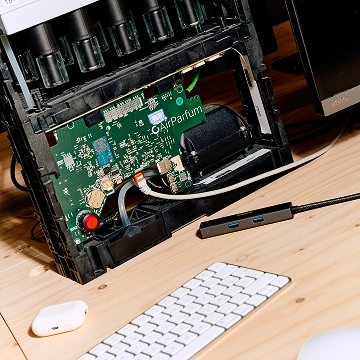
Puig had the world's best fragrance data. We turned it into a platform.
API testing checks the application below the interface, at the layer where services exchange data. Instead of clicking through a screen, you send requests straight to an endpoint and verify the response: the status code, the body, the headers, the timing. No browser, no rendering, just the contract between systems.
It sits in the fast, stable middle of the testing pyramid. UI tests are slow and brittle because they depend on layout. API tests skip all of that and confirm the logic directly, which is why they run in seconds and rarely flake. A good API test goes past the happy path: it sends a malformed payload and expects a clean 400, hits an endpoint without a token and expects a 401, and confirms a created record actually persists. Tools like Postman and Newman cover manual and scripted runs, while libraries such as supertest or REST Assured fold the same checks into the automated suite.
Contract testing extends the idea by pinning the shape of the request and response so a backend change can't silently break a frontend that depends on it. When you migrate a checkout to a new payment provider, API tests confirm the integration handles a declined card, a timeout, and a duplicate charge before any of that touches a real user.
We test APIs as their own surface, not as an afterthought to the UI. On an integration project, the service layer is where the real risk lives, so that's where we put coverage first. Auth, validation, error paths, and the edge conditions that only show up between systems get checked directly, on every change.
The suite runs in the pipeline and gates the merge. Our automated testing pins the contracts a frontend relies on, so a backend refactor surfaces a red test instead of a broken page in production. We keep the checks readable and tied to real failure modes, which is what makes software quality assurance hold up once the project is in our client's hands rather than ours.
Got services that have to talk to each other without breaking? Let's harden them.
Puig had the world's best fragrance data. We turned it into a platform.
A logistics company that ships to 190 countries built something to ship to itself.
Half a million people. One app. Zero chaos.