Wikiparfum
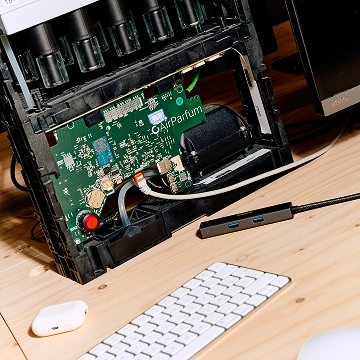
Puig had the world's best fragrance data. We turned it into a platform.
CRUD stands for Create, Read, Update, Delete: the four basic operations you can perform on stored data. Add a record, retrieve it, change it, remove it. Nearly every application that keeps data is, at its foundation, doing CRUD. A contacts app creates contacts, reads them into a list, updates a phone number, and deletes the ones you no longer need.
The acronym matters because it maps cleanly onto the tools developers use daily. In a database, the four map to INSERT, SELECT, UPDATE, DELETE. In a REST API, they map to the HTTP methods POST, GET, PUT or PATCH, and DELETE. That consistency is why a well-designed API feels predictable: once you know the resource, you can guess how to act on it. CRUD describes the operations, not the difficulty. The create step for a bank transfer involves validation, permissions, balance checks, and an audit trail, even though it is still a "create" at heart.
CRUD is sometimes used dismissively, as in "it's just a CRUD app," but the gap between naive CRUD and robust CRUD is where most real engineering lives: validation, authorization, concurrency, and what happens when two people edit the same record at once.
Almost every product has a CRUD core, and how that core is built decides whether the rest of the system is pleasant or painful to extend. We design it around consistent, predictable resources, so the API behaves the same way everywhere and a new endpoint feels familiar the moment it ships. Boring and consistent beats clever and surprising every time someone has to build on top of it.
The interesting part is everything around the four operations. Who is allowed to update this record. What validation runs before a create is accepted. What happens when two users edit the same item at once. We bake those concerns in from the start through our custom web application development and API-first development work, because retrofitting authorization and concurrency onto a naive CRUD layer is far harder than designing for them up front.
Need an API that stays clean as the product grows? The CRUD foundation is where it starts.
Puig had the world's best fragrance data. We turned it into a platform.
A logistics company that ships to 190 countries built something to ship to itself.
Half a million people. One app. Zero chaos.