Wikiparfum
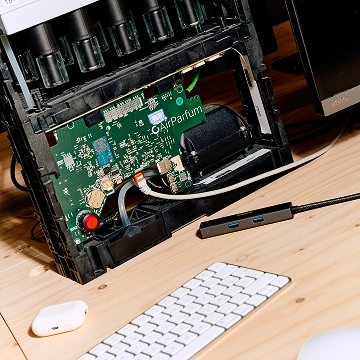
Puig had the world's best fragrance data. We turned it into a platform.
Event-driven architecture is a way of building systems where components communicate by producing and reacting to events rather than calling each other directly. A service does something, announces that it happened, and moves on. Other services listen for that announcement and act on it. The producer never knows or cares who is listening, which keeps the parts loosely coupled.
Compare it to the request-response model most APIs use, where one service calls another and waits for an answer. That works, but it ties services tightly together. If the called service is slow or down, the caller is stuck. In an event-driven setup, an order service can publish an "order placed" event, and the billing, inventory, and email services each react in their own time. When a customer checks out of an online store, that single event can trigger a payment charge, a stock decrement, and a confirmation email without the checkout flow waiting on any of them.
The trade-off is complexity. Flow that was a straight line becomes a web of reactions, which is harder to trace and debug. You also have to think about ordering, duplicate events, and what happens when a consumer fails. The payoff is systems that scale independently and absorb load, since events can queue up and be processed when consumers are ready instead of overwhelming a synchronous call chain.
We use event-driven patterns where they earn their keep, usually when a system has several jobs that can happen independently after one trigger. A retail client needed checkout to stay fast while a growing pile of downstream work piled on behind it: fraud checks, fulfilment, loyalty points, analytics. We moved that work behind events so the customer-facing path stayed quick and each downstream service could scale and fail on its own without dragging the rest down.
It is not the right answer for every project, and we are honest about that, because the debugging cost is real. When it does fit, our API integration and platform integration work leans on it to connect systems that should not be waiting on each other. We design the events, the contracts, and the failure handling up front, so the loose coupling stays an asset instead of turning into a system nobody can follow.
Got systems that should react to each other without waiting in line? Let's design the flow.
Puig had the world's best fragrance data. We turned it into a platform.
A logistics company that ships to 190 countries built something to ship to itself.
Half a million people. One app. Zero chaos.