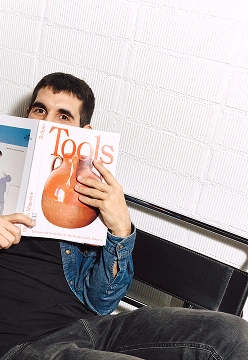
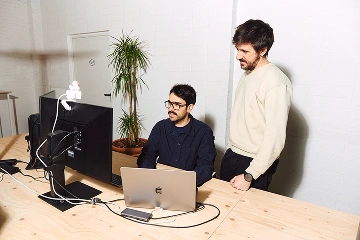
Wikiparfum
Puig had the world's best fragrance data. We turned it into a platform.
A framework is a pre-built structure that provides the foundation, conventions, and tools for building a particular kind of application. Instead of starting from an empty file, developers build on top of it, writing the application-specific logic while the framework handles the repetitive infrastructure every project of that type needs.
The clearest way to understand a framework is to contrast it with a library. A library offers functions you call when you want them; you stay in control of the flow. A framework reverses that relationship and calls your code at specific points, which developers sometimes describe as the Hollywood Principle: don't call us, we'll call you. Frameworks live at every level of the stack. React and Vue structure how interfaces get built on the frontend. Django, Rails, and Express define how a server handles requests on the backend. Jest and Pytest provide the scaffolding for writing and running tests. A team starting a new web app with Next.js inherits routing, rendering, and build tooling on day one instead of assembling them by hand.
The payoff is real: less time on plumbing, consistency across the codebase, and a community working within the same conventions. The trade-off is constraint. A framework holds opinions about how things should be done, and fighting those opinions in an unusual case can cost more than it saves. Choosing the right one is partly about how well its assumptions match the problem.
Picking a framework is one of the earliest decisions on a build, and it shapes everything after it. We choose based on the problem in front of us, not the tool we used last time, weighing the software architecture a project needs against how the team will maintain it once we hand it over.
That judgement comes from having shipped a lot of web development across very different products. We know where a framework's conventions save months and where they get in the way, so clients inherit a foundation that fits the work rather than one that quietly fights it later.
Starting something new and unsure what to build it on? Let's figure it out together.
Puig had the world's best fragrance data. We turned it into a platform.
A logistics company that ships to 190 countries built something to ship to itself.
Half a million people. One app. Zero chaos.