Wikiparfum
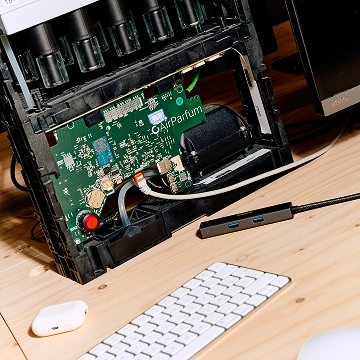
Puig had the world's best fragrance data. We turned it into a platform.
Go, also called Golang, is a programming language created at Google in 2009. It was designed to make backend services fast to build, fast to run, and easy to read months after anyone wrote them. It compiles to a single binary, starts instantly, and ships without a heavy runtime.
Its standout feature is concurrency. Goroutines and channels let a program handle thousands of simultaneous tasks without the complexity that usually comes with threads. That makes Go a natural fit for APIs, network services, command-line tools, and infrastructure software. Docker and Kubernetes are both written in it. Compared to Node.js, Go trades a familiar JavaScript ecosystem for raw throughput and static typing. Compared to Java, it drops a lot of ceremony and starts faster. A payments API that has to stay fast while traffic spikes is exactly where Go tends to win.
The language is deliberately small. Few keywords, one obvious way to do most things, and a formatter that ends arguments about style. That restraint is the point. It keeps large codebases legible and onboarding quick.
We reach for Go when a service has to be fast, lean, and dependable under load. APIs that sit at the center of a product. Background workers that crunch through queues. Tools that other systems lean on. The single-binary build also makes deployment boring, which is what you want at three in the morning.
Go is one option among several, and we pick it on the merits. If a project lives better in TypeScript or fits an existing stack, that is the honest call and we make it with you. When Go is right, the payoff is code that stays readable as the team and the system grow, and performance you do not have to keep fighting for.
Building a backend that has to stay fast as it scales? Let's figure out the right stack.
Puig had the world's best fragrance data. We turned it into a platform.
A logistics company that ships to 190 countries built something to ship to itself.
Half a million people. One app. Zero chaos.