Wikiparfum
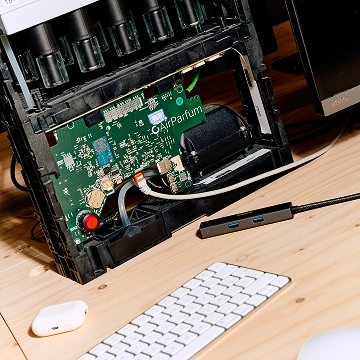
Puig had the world's best fragrance data. We turned it into a platform.
The Internet of Things is the network of physical objects that connect to the internet to send and receive data. A sensor, a thermostat, a factory machine, a parking meter, each carries enough computing and connectivity to report what it senses and act on what it is told. The "thing" is no longer just an object. It is a node in a system.
The phrase was coined by Kevin Ashton in 1999, but cheap sensors, wireless connectivity, and cloud computing are what turned it into reality over the following two decades. A typical IoT system has four layers: the devices themselves, the network that carries their data, a platform that ingests and processes it, and the applications people use to make sense of it. A vineyard with soil-moisture sensors feeding a dashboard that tells the grower exactly which rows need water is IoT working as intended. The hard parts are rarely the device. They are security, the sheer volume of data, battery and connectivity constraints, and the dozens of protocols that do not always agree with each other.
IoT overlaps with edge computing, where data gets processed near the device instead of all the way up in the cloud, and with the industrial systems often called IIoT. The common thread is the same: the physical world becomes something you can measure and respond to in software.
Our IoT development work usually starts where the data lands, not at the device. The interesting problems live in turning a flood of sensor readings into something a person can actually use and trust. We build the platform that ingests it, the logic that makes sense of it, and the interface that makes it useful.
We have partnered with clients on projects where the physical and the digital had to meet cleanly, and that is rarely tidy. Protocols clash, devices drop offline, data arrives malformed. We figure those edges out together rather than pretending they do not exist. Honest IoT software development means designing for the day the network fails, because it will.
Have devices generating data you can't yet use? Let's connect them.
Puig had the world's best fragrance data. We turned it into a platform.
A logistics company that ships to 190 countries built something to ship to itself.
Half a million people. One app. Zero chaos.