Wikiparfum
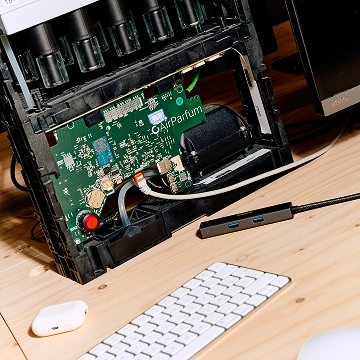
Puig had the world's best fragrance data. We turned it into a platform.
A message queue is a buffer that sits between two parts of a system so they do not have to talk to each other at the same moment. One service puts a message in the queue, another service takes it out and processes it whenever it is ready. The sender does not wait for the work to finish. It hands off the message and carries on.
This decouples timing and load. If a burst of traffic produces more work than the consumers can handle, the queue absorbs the backlog instead of crashing the system. Messages wait in line and get processed at a steady pace. A video platform that needs to transcode every upload can drop each file into a queue, return to the user immediately, and let a pool of workers chew through the encoding in the background. Tools like RabbitMQ, Amazon SQS, and Redis-backed queues are common choices.
Queues also add reliability. A message stays in the queue until a consumer confirms it was handled, so a worker that crashes mid-task does not lose the job. It is worth distinguishing a queue from a log-based system like Kafka. A classic queue delivers each message to one consumer and removes it once processed, while a log keeps an ordered record that many consumers can replay. Different tools for different shapes of problem.
We add a message queue when a system has work that should not block the user. A client running a high-traffic platform had image processing, notifications, and report generation all happening inline, and peak load was timing requests out. We pulled that work behind a queue. The user-facing response dropped to milliseconds, and a set of workers handled the heavy lifting at a pace the infrastructure could sustain.
Queues are a core piece of how we approach platform integration and API integration, because the systems we connect rarely run at the same speed. We design the message contracts, the retry behaviour, and the dead-letter handling so a failed job is caught and replayed, not silently lost. The result is systems that stay responsive under load and keep working when one piece has a bad day.
Work piling up and timing out under load? Let's get it off the critical path.
Puig had the world's best fragrance data. We turned it into a platform.
A logistics company that ships to 190 countries built something to ship to itself.
Half a million people. One app. Zero chaos.