Wikiparfum
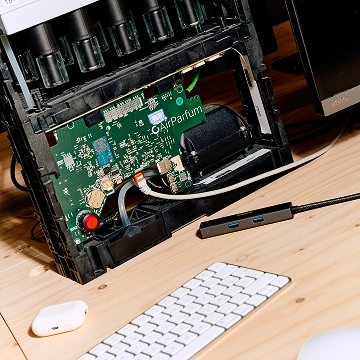
Puig had the world's best fragrance data. We turned it into a platform.
MVP stands for Minimum Viable Product: the earliest version of a product with just enough to be usable by real users and to generate meaningful feedback. The concept was popularized by Eric Ries in The Lean Startup, and the idea behind it is straightforward. Test your assumptions about what users want as early and as cheaply as you can, before pouring time and money into building the wrong thing.
An MVP is not a prototype and not a proof of concept. A prototype demonstrates an idea. An MVP is a real product, in real users' hands, built to test a specific hypothesis about value. A food delivery startup might launch with one neighborhood, ten restaurants, and a checkout that works, skipping the loyalty program and the slick animations entirely, just to learn whether people will actually order. The feedback that comes back shapes what gets built next.
The word minimum is deliberately flexible. What counts as viable depends on the market, what users already expect, and the hypothesis you are testing. Minimum never means broken or embarrassing. It means the smallest thing that can honestly answer the question you are asking, and nothing more.
The hardest part of an MVP is deciding what to leave out, and that is where we earn our keep. When a client arrives with a long feature list and a hypothesis buried somewhere inside it, we work with them to find the one question worth answering first. Then we build the smallest real product that answers it. The sooner we start, the more we learn before the budget is gone.
We are honest about the trade-offs. Cutting scope means saying no to good ideas, and we will push back when a "must-have" is really a "later." An MVP that ships and teaches you something beats a perfect product that arrives a year late aimed at the wrong target. We build the first version to learn fast, then iterate with what real usage tells us.
Got an idea you need to test before you bet everything on it? Let's build the version that proves it.
Puig had the world's best fragrance data. We turned it into a platform.
A logistics company that ships to 190 countries built something to ship to itself.
Half a million people. One app. Zero chaos.