Wikiparfum
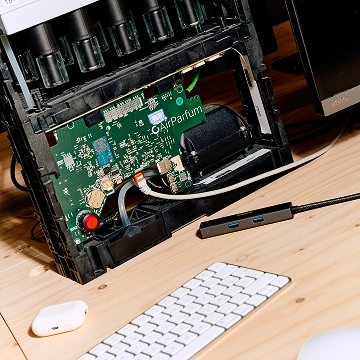
Puig had the world's best fragrance data. We turned it into a platform.
Open source is software whose source code anyone can read, use, modify, and share, under a license that grants those rights formally. The license is the load-bearing part. "You can see the code" is not open source on its own. What makes it open is the legal permission to do something with it. Licenses range from permissive ones like MIT, which let you do almost anything, to copyleft ones like the GPL, which require that what you build on top stays open too.
It is widely misunderstood as "free as in no cost." The freedom is about rights, not price. Most of the modern internet runs on open source: Linux on servers, the browsers people read this in, the databases and frameworks underneath nearly every web application. When a security flaw was found in the open-source Log4j library in 2021, it mattered precisely because so much of the world quietly depended on a single component maintained, in large part, by volunteers.
That last point is the real story of open source. It is built and sustained by communities, and the code being visible is what lets thousands of people find and fix problems faster than any one company could alone.
We build on open source every day, and we think honestly about the relationship rather than just taking. Most of our web development and custom web applications stand on open foundations, and a project that depends on a community's work has a responsibility to that community. So we contribute fixes back, keep our dependencies current, and pay attention to the licenses we pull in rather than discovering a problem at audit time.
We also advise clients on it plainly. Open source can save real money and avoid lock-in, but it is not free of cost or risk. Someone has to maintain it, patch it, and understand what is actually running. We help teams make that choice with their eyes open, weighing the freedom against the upkeep, because a dependency you do not understand is a dependency you do not control.
Building on open foundations and want them handled properly? Let's talk.
Puig had the world's best fragrance data. We turned it into a platform.
A logistics company that ships to 190 countries built something to ship to itself.
Half a million people. One app. Zero chaos.