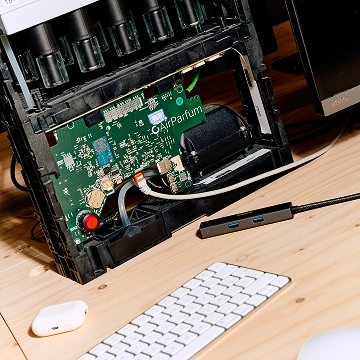
Wikiparfum
Puig had the world's best fragrance data. We turned it into a platform.
Panda CSS is a styling engine for modern web apps that generates type-safe CSS at build time. You write styles in your JavaScript or TypeScript using its functions, and Panda compiles them into static CSS files with nothing shipped to the browser at runtime.
That last point is the heart of it. Older CSS-in-JS libraries like styled-components compute styles in the browser as the page runs, which adds weight and can slow rendering. Panda does the work during the build, so the user downloads plain CSS and the runtime cost is zero. It pairs this with full TypeScript support, so design tokens, colors, and spacing are autocompleted and type-checked. Misspell a token or use a value outside your design system and the build catches it before anything ships. A team enforcing a strict design system across a large app is exactly who this serves, since the editor stops off-spec styles as you type.
Against Tailwind, the comparison is closest. Both lean on tokens and utility-driven styling, but Panda gives you typed, co-located styles and first-class design-system primitives rather than utility class strings. The trade is a build step and a newer, smaller ecosystem in exchange for type safety and zero runtime overhead.
We use Panda CSS on projects where a design system needs to hold up across a large, typed codebase. The build-time model keeps pages fast, and the type safety means a developer cannot quietly drift away from the agreed tokens without the build saying something.
It is a deliberate choice, not a default. Panda is newer than Tailwind, so we weigh that against the type safety and structure it brings before committing a client to it. Where the styling needs to stay disciplined as a team grows, it pays off. Our web development work treats styling as part of the architecture, not decoration bolted on at the end, and Panda fits projects that take their design system seriously.
Want a design system that stays consistent as the codebase grows? Let's set it up properly.
Puig had the world's best fragrance data. We turned it into a platform.
A logistics company that ships to 190 countries built something to ship to itself.
Half a million people. One app. Zero chaos.