Wikiparfum
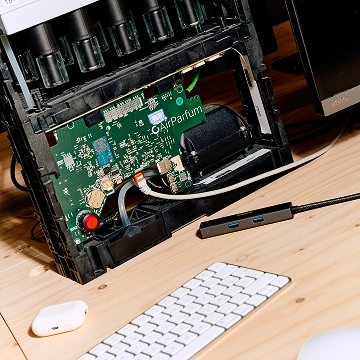
Puig had the world's best fragrance data. We turned it into a platform.
A recommendation engine is a system that predicts what a user is likely to want next and surfaces it. It is the machinery behind the "you might also like" row, the suggested next video, the products that appear at checkout. The engine takes what it knows about a user and their behavior and ranks a catalog of items by how likely each one is to be relevant right now.
There are two classic approaches, often combined. Collaborative filtering recommends based on patterns across users: people who bought this also bought that. Content-based filtering recommends items similar to what a user already liked, judged by the items' own attributes. Modern engines blend both and layer machine learning on top to handle scale and cold starts, the problem of recommending to someone the system has barely seen. An online store suggesting products based on what similar shoppers purchased is a recommendation engine using collaborative filtering, and a well-tuned one can lift a meaningful share of revenue.
The engine is only as good as the data and the feedback loop behind it. Every click, purchase, and skip is a signal, and a recommender that learns from those signals quickly will outperform one that recommends the same popular items to everyone.
We build recommendation engines that move a real metric, not ones that just look smart in a demo. That starts with the data: clean behavioral signals, a clear definition of what a good recommendation actually is, and a way to measure it once it ships. A recommender optimizing for the wrong thing can quietly hurt the experience.
Our work here pulls together machine learning and data-driven customer insights, because a strong engine depends on genuinely understanding how customers behave. We build the model, wire it into the product, and run it against real traffic with A/B tests so the lift is measured rather than assumed. The AI solutions we ship here are tuned on the client's catalog and customers, not on a generic benchmark.
Want to show each customer the thing they're most likely to want? Let's build it.
Puig had the world's best fragrance data. We turned it into a platform.
A logistics company that ships to 190 countries built something to ship to itself.
Half a million people. One app. Zero chaos.