Wikiparfum
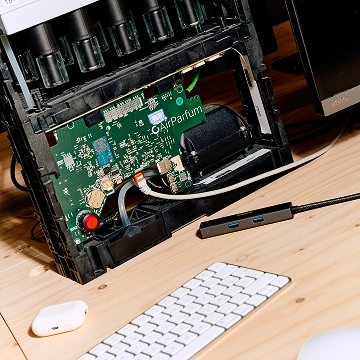
Puig had the world's best fragrance data. We turned it into a platform.
A REST API (Representational State Transfer Application Programming Interface) is a standard way for two systems to talk to each other over HTTP. It follows a set of architectural principles that make web services predictable, stateless, and easy to work with across different platforms and languages.
REST uses the standard HTTP methods you already rely on every day: GET to read data, POST to create it, PUT or PATCH to update it, DELETE to remove it. Each request is self-contained, so the server keeps no session state between calls. Resources live behind URLs, and responses usually come back as JSON. A mobile app fetching a user's order history with a single GET request to a clean URL is REST working as intended. That simplicity and universality is why REST became the dominant pattern for web APIs over the past two decades.
REST isn't the only option. GraphQL lets clients request exactly the fields they need in one call, and gRPC trades human readability for raw speed between services. Each makes different trade-offs in flexibility, performance, and complexity. REST remains the safe default for most public and internal web APIs, which is why it's still the one most teams start from.
Clean APIs are how the products we build stay flexible. We design REST endpoints with clear contracts, sensible status codes, and predictable shapes, so the frontend, mobile apps, and third parties can all consume the same backend without surprises. An API-first approach means the contract gets agreed before a line of UI is written.
Global brands often come to us with a backend that needs to feed more than one channel at once. We work with their teams to design the integration so each consumer gets what it needs, then document it properly so nobody has to reverse-engineer it later. When GraphQL or gRPC fits the problem better, we say so. The goal is the right architecture, built together, not a default applied on autopilot.
Need a backend that can feed your web, mobile, and partner integrations cleanly? Let's design the API first.
Puig had the world's best fragrance data. We turned it into a platform.
A logistics company that ships to 190 countries built something to ship to itself.
Half a million people. One app. Zero chaos.