Wikiparfum
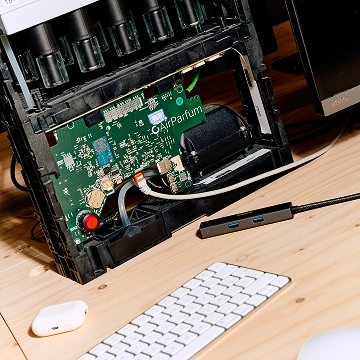
Puig had the world's best fragrance data. We turned it into a platform.
Test automation is running tests with code instead of a person clicking through the app. You write scripts that exercise the software, assert on the results, and report pass or fail. Once written, they run on demand: on every commit, every night, before every release. The same checks that would take a human an afternoon run in minutes and never get bored or skip a step.
The real payoff is regression. As a product grows, every change risks breaking something that already worked, and re-checking everything by hand becomes impossible. Automated suites make that re-check cheap, so teams can ship often without fear. Automation spans the whole stack: unit tests on individual functions, integration tests across components, API tests against endpoints, and end-to-end tests driving a real browser through a full journey with tools like Playwright, Cypress, or Selenium. A team might automate the login, search, and checkout flows so a thousand-line refactor gets validated against all three before anyone reviews it.
Not everything should be automated, and pretending otherwise wastes money. Automation pays off on stable, repetitive, high-value checks. It struggles with things that change constantly or need human judgment, like whether a layout actually looks right. The skill is choosing what to automate. The classic guidance is a pyramid: many fast unit tests at the base, fewer integration tests above, and a small set of slow end-to-end tests on top.
We wire automated testing into the CI/CD pipeline so it runs on every change, not on a schedule someone has to remember. A pull request that breaks a test doesn't merge. That single rule does more for quality than any amount of manual checking after the fact, because the feedback lands while the code is still fresh in the author's head.
We're deliberate about what gets automated. Stable, high-value flows get solid Playwright coverage. Throwaway or judgment-heavy checks stay manual, because a flaky suite nobody trusts is worse than no suite at all. When a client's releases have turned slow and nerve-wracking, we usually start here: automate the critical paths, plug them into CI/CD, and give the team back the confidence to ship fast.
Tired of slow, manual release checks? Let's automate the parts that matter.
Puig had the world's best fragrance data. We turned it into a platform.
A logistics company that ships to 190 countries built something to ship to itself.
Half a million people. One app. Zero chaos.