Wikiparfum
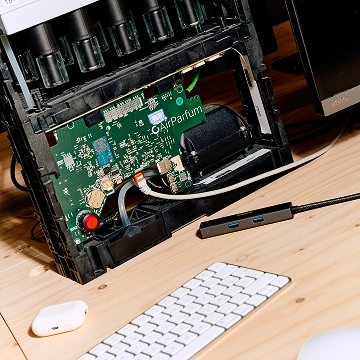
Puig had the world's best fragrance data. We turned it into a platform.
Zero-trust is a security model that assumes no user, device, or request is trustworthy by default, even inside the network. The older approach guarded the perimeter and trusted everything within it, which fell apart the moment an attacker got past the wall or a laptop got compromised. Zero-trust drops the idea of a safe inside. Every request is verified, every time, regardless of where it comes from.
The model rests on a few principles. Verify explicitly, using identity, device health, and context for each access decision. Grant least-privilege access, so a user or service reaches only what it needs and nothing more. Assume breach, and design so that one compromised account cannot move freely across the system. Microsegmentation splits the network into small zones, so an attacker who gets into one part cannot wander into the rest. If a stolen credential opens one service but every other service still demands its own verification, the damage stays contained.
Zero-trust is an architecture and a discipline, not a product you install. It touches identity, networking, and how services talk to each other. Done well, it shrinks the blast radius of any single failure, which matters more as systems spread across cloud, devices, and remote teams.
We design systems where services authenticate to each other and permissions stay tight by default. A component gets the access its job requires and nothing extra. When we standardise a platform, identity and access control are part of the foundation, so the principles hold consistently instead of varying service by service.
This shows up across platform standardisation and custom web applications. We think about the blast radius of a failure early, because containing damage is cheaper than cleaning it up. We have built systems for brands operating across many environments, where one trusted-by-default shortcut becomes a real liability, and that pushes us toward verifying instead of assuming.
Running a platform where one breach can't be allowed to spread? Let's architect for it.
Puig had the world's best fragrance data. We turned it into a platform.
A logistics company that ships to 190 countries built something to ship to itself.
Half a million people. One app. Zero chaos.