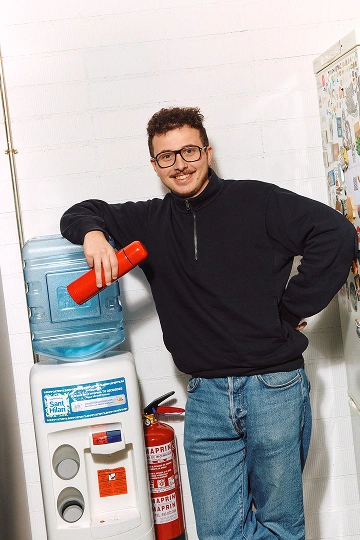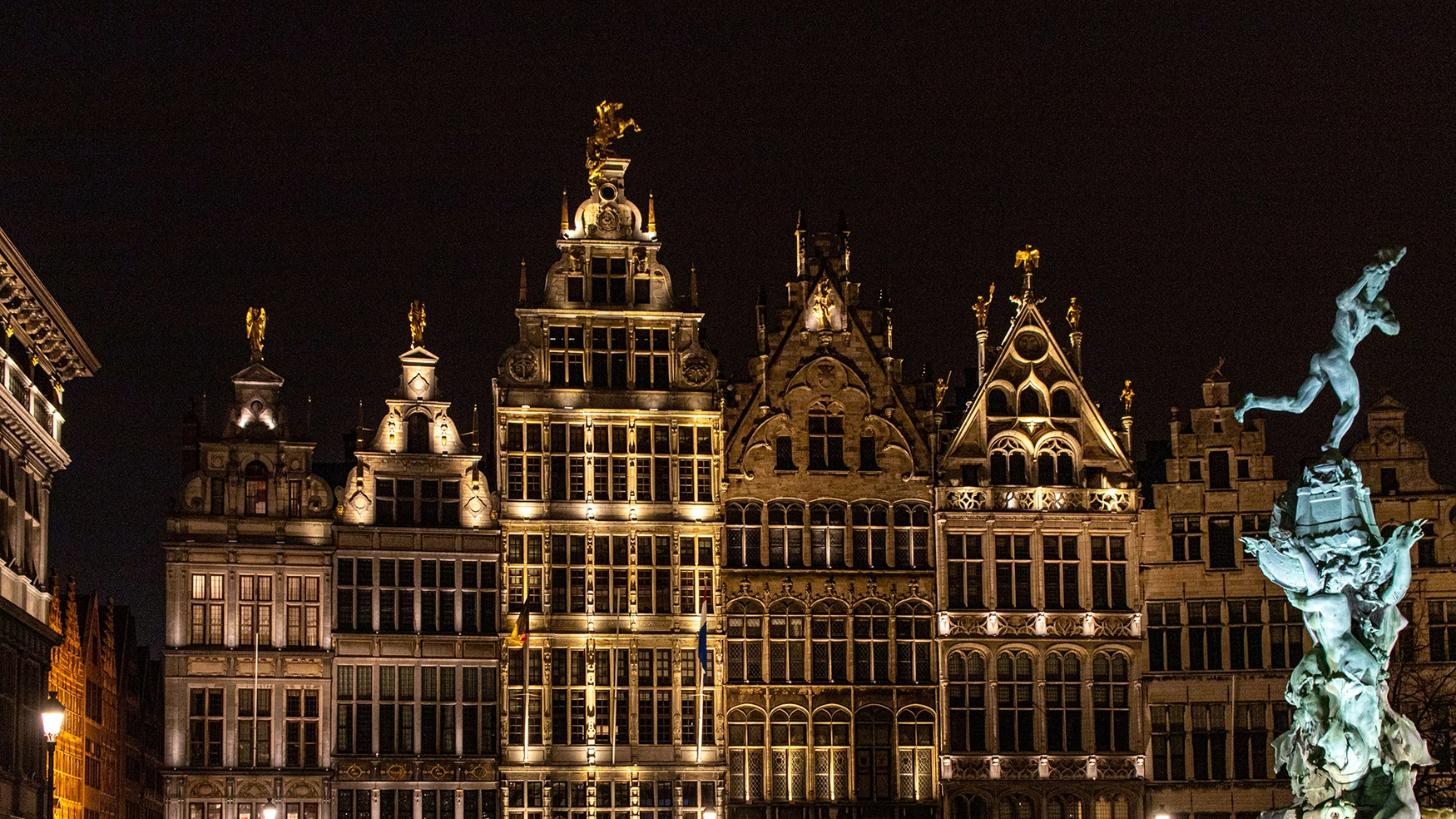
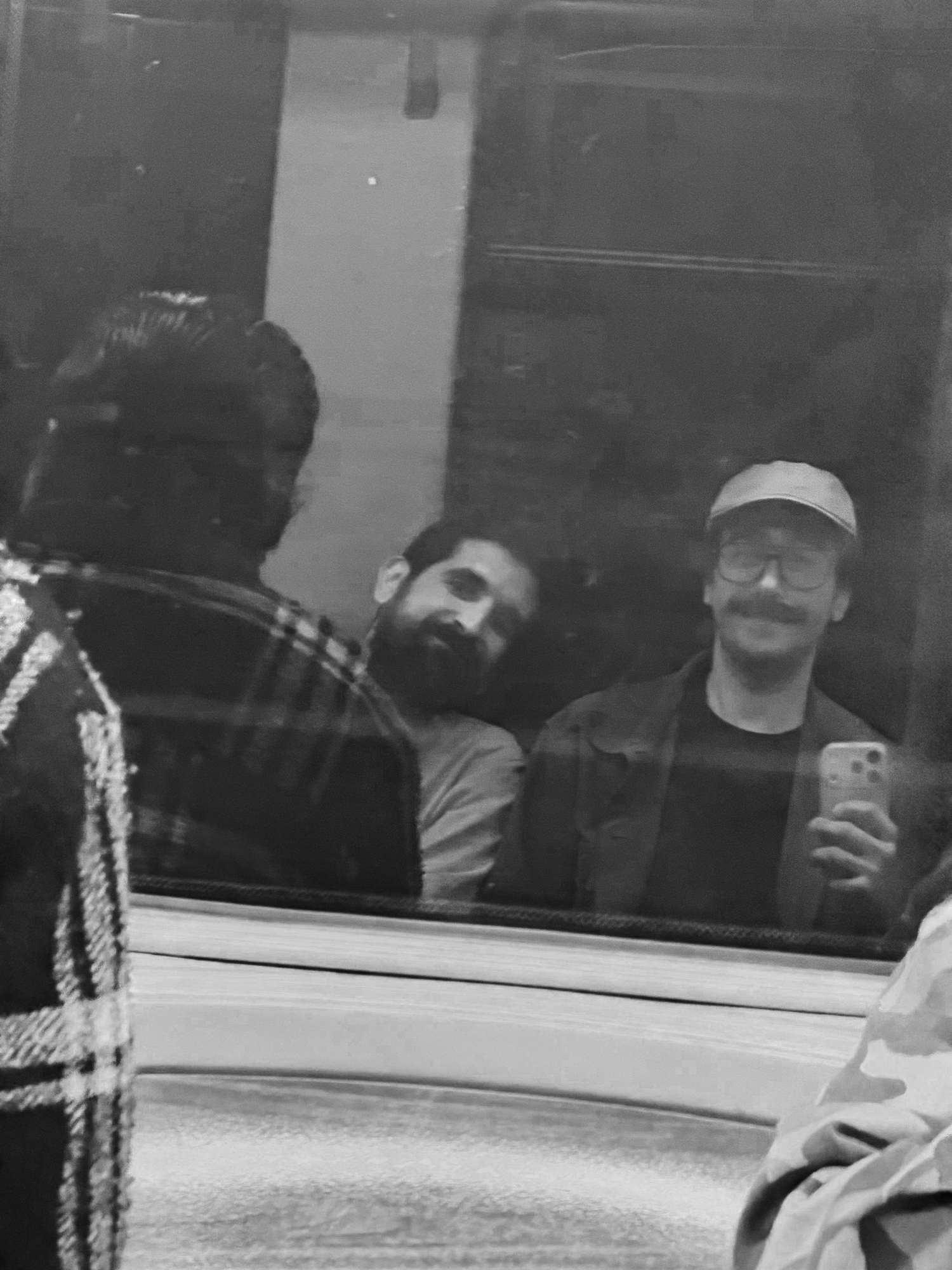
Last week we went to Antwerp for Us By Night, the design and creativity festival. Aymón Malonda, our Chief Growth Officer, and I went together. The goals we set for the trip were to meet artists, designers and technologists with interests like ours, enjoy the festival talks, and hand out some of the stickers we'd made.
The venue
The building is an old industrial warehouse transformed for the event, with ceilings up to 11 metres high and 5,000 square metres of space.
Once inside, we found an explosion of colour, mixing fashion installations, shipping containers, bars and food stalls, and two big stages for the talks.
The topic of the moment: human vs AI
Before getting to Antwerp, I already had a feeling that the topic of conversation during the festival would be AI. Our industry is going through a moment of uncertainty, as always happens when a technology appears that changes everything. A couple of talks were all it took to confirm it. It was also the most talked-about topic whenever we had a beer with other attendees.
Our profession is about creating emotions and experiences, and until now it has always been people who built them. What's more human than being able to pass an emotion on to someone? In recent years the industry has changed completely, and we still don't know what place we'll end up holding. That raises two concerns. On one hand, whether people will still be needed, or whether we'll be left out of the industry, without work. The other, which is perhaps more relevant for society, is whether AI will be able to create experiences and emotions with the same quality as people. And not just quality, but genuineness. What sets people apart from machines (and from the algorithms that generate text, LLMs) is that people are able to feel emotions and make decisions that aren't based on reason or logic, and to do it "because that's what we believe". If a moment comes when reason overrides that, where will that leave creativity?
In our industry (web, app and installation development), anyone who hasn't been using AI for years is already out of date. In such a fast paradigm shift, small and medium-sized companies like ours have a competitive advantage: we've adapted and integrated AI into our processes and workflows. Large corporations are still making big efforts to adapt.
The problem comes when that integration isn't backed by processes that certify that the work coming out of a robot is as good as, or better than, the work a person used to do.
Stickers for the festival
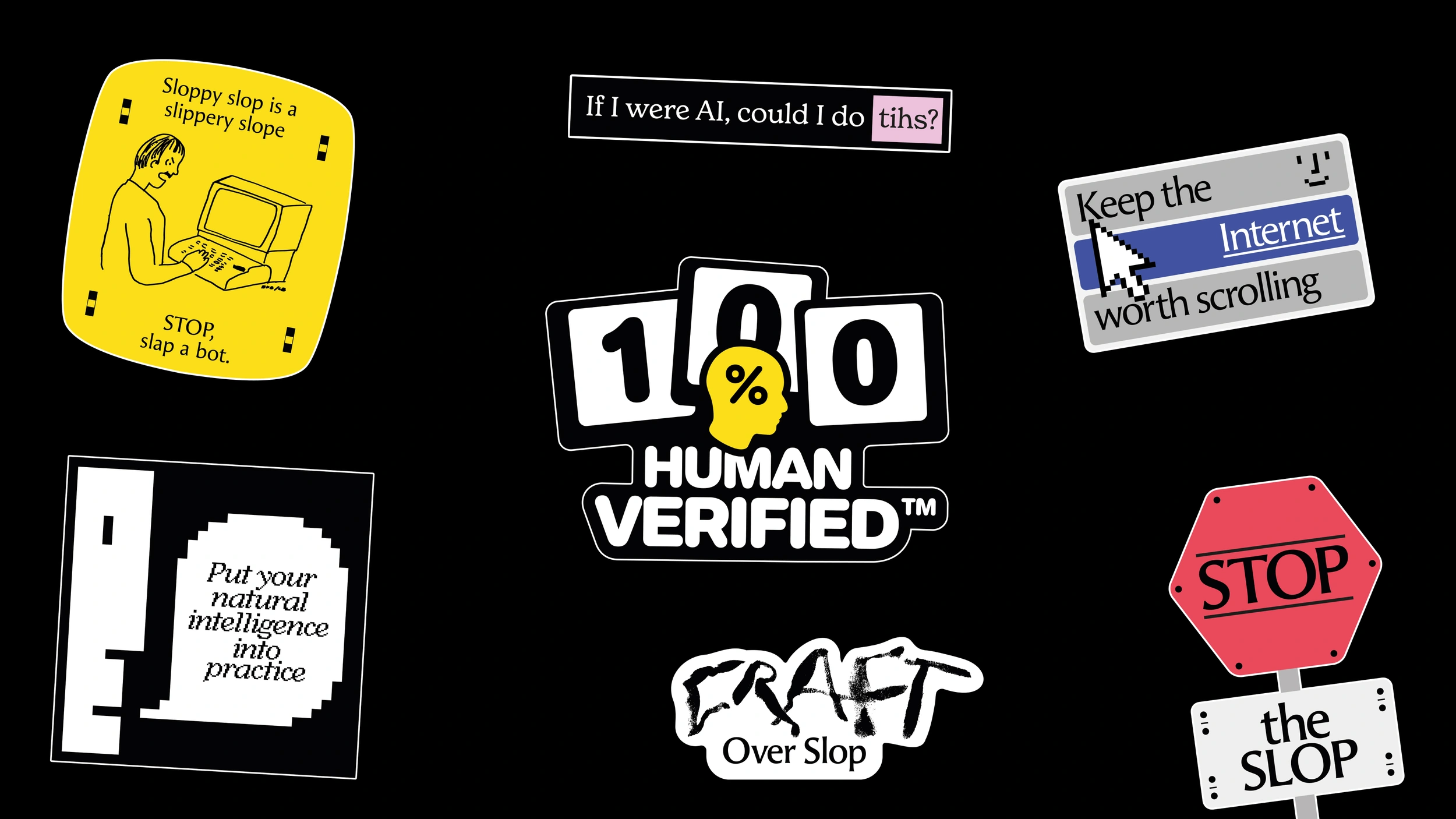
Knowing AI would be the star topic, we wanted to use the festival to show where we stand on it. So we decided to make a few stickers that were fun, but carried a clear message.
The main message of the stickers is "100% human verified". Some of them also talk about slop (the junk AI generates when nobody reviews it), and how easily it ends up in the work we deliver if there isn't an effective review process. Others talk about how creativity goes beyond automating work with robots, and how being creative means breaking the mould.
At Dallonses, since AI tools first appeared, we've put processes in place to make sure our work, even if it can now be faster, keeps or improves its quality. We do it through our Work Agreement, the document that defines how any piece of work has to be done and reviewed, from a new build to the smallest task. Every task goes through the same steps: it's defined, developed, reviewed by AI agents, and finally reviewed by hand by developers and QA engineers.
What we take away from the festival
Over those festival days we met artists, illustrators, animators, technologists (creatives, in short) who captivated us and made us want to keep creating projects that generate wonderful experiences.
We also handed out lots of stickers, and saw them stuck on laptops, phone cases and the odd lamppost.
And above all, we saw projects and talks that reminded us that, despite the uncertainty, our industry is still very much alive:
Studio Dumbar: a branding agency from Amsterdam. We liked that they put the spotlight on the work of musicians and audio engineers, and on how much weight music carries in interactive experiences. Well, to be honest, we like everything they do.
Louis Henry Mitchell: the passion Louis showed for his Sesame Street muppets is enviable. A whole life dedicated to what he loves most.
Kim Lê Boutin: brought us closer to that blend of design and technology we identify with so much.
Gutter: for us, the most interesting interactive installation of the festival. Built with TouchDesigner, it let you make printable posters that changed dynamically with a MIDI keyboard.
See you next year
Us By Night has announced that this was the last edition in Antwerp. See you next year, wherever it ends up.
Related services
Ready to work together?
Book a meeting