Wikiparfum
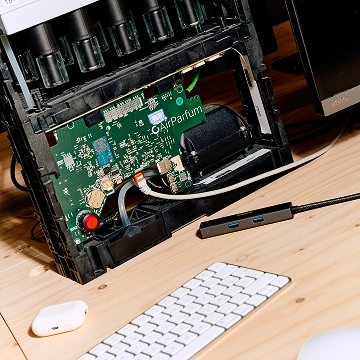
Puig had the world's best fragrance data. We turned it into a platform.
Customer lifetime value estimates the total profit a customer generates across the whole time they stay with a business, not just on their first purchase. It reframes a customer from a one-off transaction into a relationship with a measurable worth. A subscriber who pays 30 a month for three years is worth far more than that first month suggests, and CLV is how you put a number on it.
A simple version multiplies average order value by purchase frequency by the length of the relationship, then accounts for the cost of serving that customer. More serious versions use retention rates and discount future revenue back to today, since money earned next year is worth less than money earned now. Predictive CLV goes further, using machine learning on past behaviour to forecast what a given customer is likely to be worth before the relationship has played out. The metric only means something next to acquisition cost. If you spend 200 to win a customer worth 80, the unit economics are broken no matter how good the campaign looks.
CLV shapes decisions across the business. How much to spend acquiring a customer, which segments deserve more attention, where retention effort pays off. A high-CLV segment quietly churning is a more urgent problem than a low-CLV one, and the metric is what makes that visible.
CLV is only as good as the data behind it. We build the customer data platforms and unified records that make it calculable in the first place, pulling purchase history, retention, and behaviour into one place a model can actually use. Without that foundation, CLV is a guess dressed up as a number.
From there we connect it to data-driven customer insights and predictive analytics, forecasting value per segment so spend and retention effort go where they earn the most. We have built this for brands with large customer bases where small shifts in retention move real revenue, and we are honest about the limits of any forecast. A model is a tool for better decisions, not a crystal ball, and we treat it that way.
Want to know what your customers are really worth over time? Let's build the data to find out.
Puig had the world's best fragrance data. We turned it into a platform.
A logistics company that ships to 190 countries built something to ship to itself.
Half a million people. One app. Zero chaos.