Wikiparfum
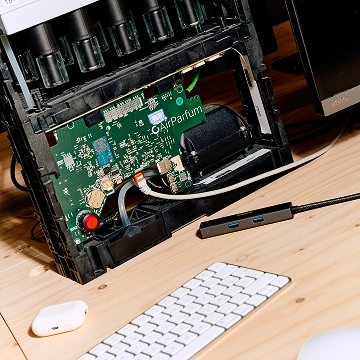
Puig had the world's best fragrance data. We turned it into a platform.
ETL and ELT are two ways of getting data out of source systems and into a place where it can be analyzed. Both move data through three steps: extract it from a source, transform it into a usable shape, and load it into a destination. The difference is the order.
ETL stands for extract, transform, load. Data is cleaned and reshaped before it lands in the warehouse, so what arrives is already structured and ready to query. ELT flips the last two steps. Raw data lands first, then gets transformed inside the destination using the warehouse's own compute. ELT became common once cloud warehouses like BigQuery and Snowflake made it cheap to store everything and transform on demand. A retailer pulling sales from a point-of-sale system, web orders from an ecommerce platform, and inventory from a third tool needs all three reconciled before anyone can trust a revenue number, and that reconciliation is exactly what the transform step handles.
Neither approach is universally better. ETL fits cases with strict governance, sensitive fields that should never land raw, or fixed schemas. ELT fits exploratory work where you want the raw data preserved and the freedom to reshape it later. Most modern data stacks lean ELT, but plenty of pipelines mix both depending on the source.
We build the pipelines that feed a company's reporting and analytics, and we pick the approach that fits the actual sources rather than the trend of the month. When a client has clean, well-governed systems and tight compliance rules, ETL keeps sensitive data from ever landing raw. When they want to keep everything and figure out the questions later, ELT into a cloud warehouse gives that room.
The hard part is rarely the loading. It's the transform logic that reconciles ten systems that each define "customer" differently. We sit with the people who own those systems, map how the data actually behaves, and build pipelines that hold up when a source changes its format without warning. Clean data analytics depends on this layer working, so we treat it as foundation, not plumbing.
Got data scattered across systems that need to talk to each other? Let's connect them.
Puig had the world's best fragrance data. We turned it into a platform.
A logistics company that ships to 190 countries built something to ship to itself.
Half a million people. One app. Zero chaos.