Wikiparfum
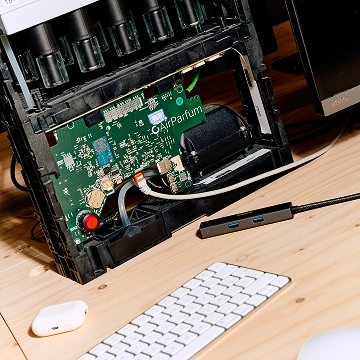
Puig had the world's best fragrance data. We turned it into a platform.
Neurodiversity is the idea that variation in how human brains work is natural, not a defect to be corrected. It covers conditions like autism, ADHD, dyslexia, and dyspraxia, and it frames them as differences in processing rather than disorders waiting for a cure. Roughly one in seven people is thought to be neurodivergent in some way.
The concept reshapes two things. In workplaces, it shifts the question from "how do we accommodate this person" to "how do we build an environment where different minds do their best work." In product design, it forces a harder look at assumptions. A form that times out after thirty seconds, an interface that buries critical actions under animation, dense walls of text with no structure: these quietly exclude people who process information differently. A reading mode that strips clutter and lets someone control pacing is the kind of small change that turns a frustrating product into a usable one.
Designing for neurodiversity overlaps heavily with accessibility, but it pushes further than checklist compliance. It asks whether the experience itself respects the range of ways people actually think, focus, and read.
Our team thinks in more than one way, and that is a strength we protect rather than smooth over. The way someone with ADHD spots a pattern, the way a dyslexic teammate questions cluttered copy, these change the work for the better. So we structure how we collaborate around it. Clear written context, fewer ambush meetings, room to work in the mode that suits the task.
That perspective carries into how products get built. We approach inclusive design and web accessibility as engineering problems with real users in mind, not boxes to tick before launch. When the people building an interface think differently from each other, the interface tends to work for more kinds of minds. We bring that lens to accessibility testing and to the questions we ask a client before the first wireframe exists.
Building something that has to work for every kind of mind, not just the default one? Let's talk.
Puig had the world's best fragrance data. We turned it into a platform.
A logistics company that ships to 190 countries built something to ship to itself.
Half a million people. One app. Zero chaos.