Wikiparfum
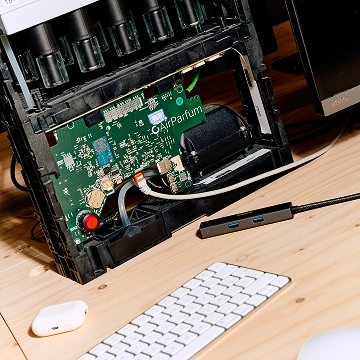
Puig had the world's best fragrance data. We turned it into a platform.
A user story is a short description of a feature told from the perspective of the person who will use it. It answers who wants something, what they want, and why. The common format reads: "As a [type of user], I want [an action], so that [a benefit]." That last clause is the one that matters most, because it forces the team to name the reason behind the work instead of just the mechanic.
Stories are deliberately small and deliberately incomplete. They are a placeholder for a conversation, not a spec handed down from above. The detail gets added through acceptance criteria, the conditions that define when the story is done. A story like "As a returning shopper, I want to save my payment details, so that checkout is faster next time" tells you nothing about the UI, and that is the point. It keeps the team talking about the outcome before anyone argues about buttons.
User stories sit at the heart of how teams plan and prioritise in agile delivery. They feed the backlog, get estimated, and turn into the units of work a team commits to each sprint. Good stories stay focused on a real user need rather than an internal task, which is what separates them from a to-do list dressed up in story syntax.
We write stories with clients, not for them. Before a sprint, we sit down and turn vague intentions into stories with the people who understand the business and the people who will use the thing. That conversation is where most of the value lives. The story is just what we write down afterward.
Every story we take into a sprint carries acceptance criteria, so "done" is a standard and not an opinion. We keep them anchored to genuine user need, which is where our user experience design work starts and where it gets checked. When the user research says something different from the assumption baked into a story, we rewrite the story. The backlog stays honest. The product stays pointed at the people it serves.
Got a backlog full of features but no shared picture of who they're for? Let's fix that.
Puig had the world's best fragrance data. We turned it into a platform.
A logistics company that ships to 190 countries built something to ship to itself.
Half a million people. One app. Zero chaos.