Wikiparfum
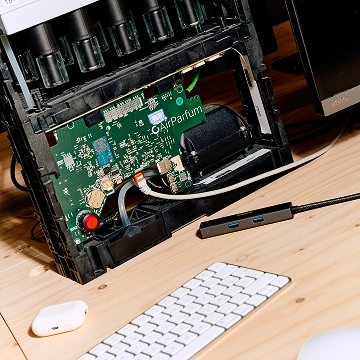
Puig had the world's best fragrance data. We turned it into a platform.
Digital inclusion is the work of making sure everyone can access, afford, and actually use digital technology. It spans three things that have to hold together: connectivity, so people can get online; devices and affordability, so they have something to get online with; and skills and design, so the experience makes sense once they arrive.
It is the active counterpart to the digital divide. Where the divide describes the gap, inclusion describes the effort to close it. That effort lands heavily on how products are built. A government benefits portal that only works on the latest browser, assumes fast broadband, and demands fluent reading of dense legal English excludes exactly the people who most need the service. The fix is rarely charity. It is design that does not assume everyone arrives with the same connection, device, language, and ability.
This is where digital inclusion meets accessibility directly. Building for older devices, slower networks, screen readers, and plain language is not a separate kindness bolted on at the end. It is the same craft that makes a product work for the people at the edges of the assumed user.
We are a certified B-corp, and inclusion is one of the reasons accessibility is non-negotiable in how we build. The default user is a fiction. Real audiences arrive on old phones, on patchy connections, with screen readers, in a second language, and a product that quietly assumes otherwise has already shut a chunk of them out.
So we treat inclusive design and web accessibility as part of the engineering, not a compliance pass before launch. We build interfaces that degrade gracefully on weak connections, meet WCAG standards because they map to real human needs, and read clearly to someone who is not a native speaker. When a product reaches more people, it works harder for the client too. That alignment is why we push these questions into the room before the first wireframe.
Building something that has to reach everyone, not just the easy users? Let's talk.
Puig had the world's best fragrance data. We turned it into a platform.
A logistics company that ships to 190 countries built something to ship to itself.
Half a million people. One app. Zero chaos.