Wikiparfum
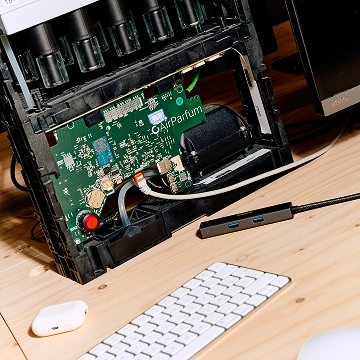
Puig had the world's best fragrance data. We turned it into a platform.
Kanban is a visual workflow management method for moving work through a system and improving how it flows. It started in the Toyota manufacturing system in the 1940s, where the name (Japanese for signboard or visual card) described physical cards that signaled when to produce more. In the 2000s it was adapted for knowledge work and software development.
The heart of Kanban is the board. Work items live as cards that move left to right through columns representing stages of the workflow, from a backlog through various in-progress states to done. The board gives everyone a real-time view of where every piece of work actually is. A defining principle is the work-in-progress limit: a cap on how many items can sit in any one stage at a time. When a team can only have three things "in review" at once, a fourth card piling up makes the bottleneck visible immediately, which pushes people to finish work before starting more.
Unlike Scrum, Kanban has no fixed-length sprints and no prescribed roles. It is a continuous flow model rather than a cadence of iterations, which makes it a strong fit for teams with unpredictable or highly variable workloads: support queues, maintenance work, or anything where priorities shift faster than a two-week sprint can absorb.
We use Kanban where the work does not fit neatly into fixed sprints. Ongoing maintenance, support, and projects where priorities move week to week all run better on a continuous flow than on a rigid cadence. The board sits in front of the whole team and the client, so where every task stands is never a mystery and no one has to ask for a status update.
WIP limits are the part we actually care about. Capping work in progress sounds like it slows a team down, and it does the opposite. It forces things to get finished instead of half-finished, and it surfaces bottlenecks while they are still small. We adapt the method to how each client works rather than imposing a textbook version, because the point is flow, not ceremony.
Work piling up faster than it ships? Let's get it flowing.
Puig had the world's best fragrance data. We turned it into a platform.
A logistics company that ships to 190 countries built something to ship to itself.
Half a million people. One app. Zero chaos.