Wikiparfum
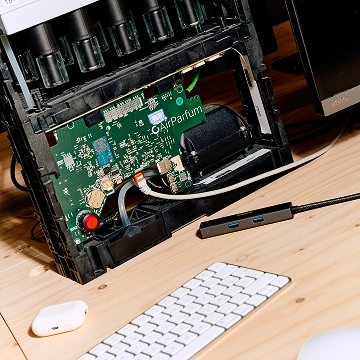
Puig had the world's best fragrance data. We turned it into a platform.
A theory of change is a structured explanation of how and why a set of activities is expected to lead to a desired long-term outcome. It maps the chain backwards from the goal: this is the change we want, these are the conditions needed to reach it, these are the activities that produce those conditions, and these are the assumptions that have to hold true for the whole thing to work.
Its real value is in forcing the assumptions into the open. Most plans hide a leap of faith somewhere between "we did the activity" and "the world got better." A theory of change makes you write that leap down and defend it. It differs from a simple logic model in that emphasis on the why and the if. A youth employment programme might assume that training plus a job placement leads to lasting employment; the theory of change makes that causal claim explicit, which means it can also be tested and proven wrong. That testability is the point. A theory you cannot disprove is not a theory, it is a wish.
It is widely used in the nonprofit and impact world as the backbone for designing programmes and for impact measurement, because it defines in advance what you would need to observe to know whether the work succeeded.
We are a software partner, not an impact consultancy, but the discipline behind a theory of change is one we use constantly. Every project rests on a causal claim: build this, and the client's actual problem goes away. Making that claim explicit early is how we avoid shipping features that work perfectly and change nothing.
As a certified B Corp, we apply the same logic to our own commitments, mapping the assumptions behind how our work is meant to do good rather than assuming it does. With clients, this thinking sits underneath our sustainable tech consulting, where the question is always whether a given change actually moves the number that matters or just looks like progress. Name the assumption, then test it. That habit saves a lot of expensive guessing.
Want to be sure the build actually solves the problem? Let's map it first.
Puig had the world's best fragrance data. We turned it into a platform.
A logistics company that ships to 190 countries built something to ship to itself.
Half a million people. One app. Zero chaos.