Wikiparfum
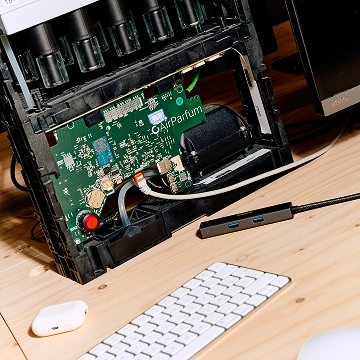
Puig had the world's best fragrance data. We turned it into a platform.
A user journey is the full arc of someone's experience with a product or brand, from the first time they hear about it to long after they have used it. A journey map lays out the stages, the actions at each one, and the thoughts and emotions that go with them. It captures highs and lows across channels and time, not just clicks on a screen.
This is where the journey separates from the user flow. A flow is one task, drawn screen by screen: reset a password, finish a checkout. A journey is wider. It might run from "saw an ad" through "compared options," "signed up," "hit a problem," "contacted support," and "renewed a year later." A streaming subscriber's journey includes the moment the free trial ends and the bill arrives, which is often where good products lose people even when every individual flow works fine.
Journey maps are useful because they expose the gaps between touchpoints. A signup can be flawless and a renewal email can still sound like it came from a different company. Mapping the whole journey makes those seams visible so a team can fix the experience as a whole, not screen by screen.
We map journeys to find the moments that actually decide whether someone stays. The dropout often sits between steps, in a confusing email or a dead end after an error, not inside a single screen. Mapping the whole arc with the client puts those moments on the table where we can do something about them.
The map only earns its place if it is grounded in evidence, so we build ours from UX research and behavioral insights rather than guesswork. Where the journey shows friction, we dig into why with user testing, then redesign that moment and check whether the experience improves. The map guides the work; it does not replace it.
Losing people somewhere between sign-up and renewal? Let's map the whole journey.
Puig had the world's best fragrance data. We turned it into a platform.
A logistics company that ships to 190 countries built something to ship to itself.
Half a million people. One app. Zero chaos.