Wikiparfum
Puig had the world's best fragrance data. We turned it into a platform.
User research is the work of learning what people actually need from a product, based on evidence rather than opinion. It covers interviews, surveys, usability testing, field studies, and analytics. The point is to replace assumptions about users with observations of them, so design decisions rest on something real.
Methods split along two lines that are worth keeping straight. Qualitative research asks why and uncovers motivations, frustrations, and mental models through small, deep sessions. Quantitative research asks how many and measures behavior across large samples. They are most powerful together: a survey shows that a quarter of users abandon onboarding, and five interviews reveal the confusing step that explains it. A team rebuilding a banking app might watch ten people try to set up a transfer and learn more in an afternoon than from months of guessing in meetings.
Research also splits by timing. Done before design, it shapes what gets built. Done during, it checks whether the thing in front of users works. Skip it and a team builds for an imagined user, then finds out the hard way the real one behaves differently.
We run UX research to answer real questions, not to produce a deck. Before scoping a method, we ask what decision the research needs to inform, then choose the lightest approach that gets a trustworthy answer. Sometimes that means a user research study with a dozen sessions. Sometimes it means usability testing on a rough prototype the same week.
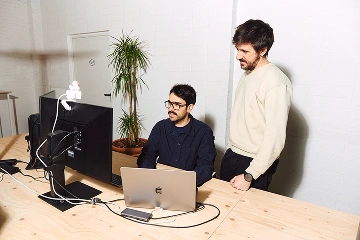
The findings have to travel, so we frame behavioral insights in terms the whole team can act on, not as a report that gets read once and shelved. We bring clients into sessions where we can, because watching a user struggle changes the conversation faster than any summary. The research keeps running as the product evolves, since the questions never fully stop.
Building on a hunch about what users want? Let's go find out.
Puig had the world's best fragrance data. We turned it into a platform.
A logistics company that ships to 190 countries built something to ship to itself.
Half a million people. One app. Zero chaos.