Wikiparfum
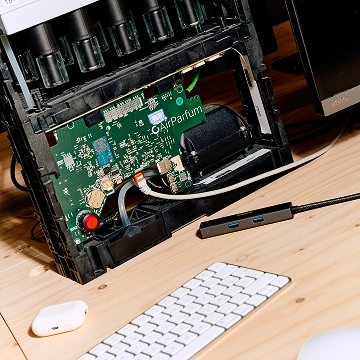
Puig had the world's best fragrance data. We turned it into a platform.
Funnel analysis measures how people move through a defined sequence of steps and where they fall out along the way. A funnel is any path with a clear start and goal: view a product, add to cart, start checkout, pay. By counting how many users reach each step, the analysis shows exactly where the journey breaks.
The value is in the drop-off. If a thousand people start checkout and only three hundred finish, the funnel points at the two-thirds who left and the step where they left. That's a specific problem to investigate instead of a vague sense that conversion is low. A subscription app might find that signups are healthy but the email verification step loses half its users, which is a fix worth chasing. Funnel analysis differs from cohort analysis, which groups users by when they joined and tracks behavior over time. Funnels answer "where do people drop off in this flow." Cohorts answer "how does this group behave as weeks pass."
Funnels are only as honest as the events behind them. If a step isn't tracked cleanly, the drop-off is an artifact, not a finding. Reliable funnels depend on reliable event tracking underneath.
When a client knows conversion is leaking but not where, funnels are where we start. We map the real journey, instrument each step, and let the numbers point to the break instead of arguing about it in a meeting.
This sits across the data analytics and user testing work we do. The funnel tells us which step is bleeding users; usability testing tells us why. Pairing the two turns a drop-off number into a concrete change to ship and measure. We run that loop with clients until the curve moves, then keep watching it.
Losing users somewhere between landing and checkout? Let's find the exact step.
Puig had the world's best fragrance data. We turned it into a platform.
A logistics company that ships to 190 countries built something to ship to itself.
Half a million people. One app. Zero chaos.